
Gallstones are common, often silent, and frequently misunderstood. Many people live for years with Gallbladder stone disease without symptoms, assuming it is harmless if pain is absent. However, long-standing or poorly managed gallstones are one of the strongest known risk factors for Gallbladder cancer, a disease that is often detected late and carries a poor prognosis.
This article explains the common mistakes people make while living with gallstones and how these mistakes may increase the long-term risk of gallbladder cancer, especially in high-risk regions such as Nepal.
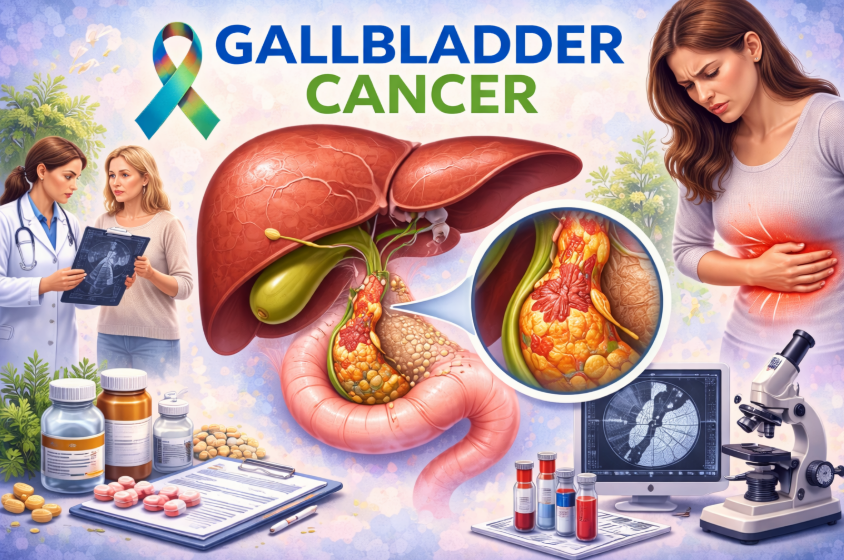
Understanding Gallstones and Gallbladder Cancer
What Are Gallstones?
Gallstones are hardened deposits that form inside the gallbladder, usually from cholesterol or bile pigments. They can vary in size from tiny grains to stones several centimeters wide.
Gallstones are common and often detected incidentally during ultrasound examinations.
What Is Gallbladder Cancer?
Gallbladder cancer is a rare but aggressive malignancy that originates in the gallbladder lining. It is more common in certain geographic regions, including South Asia.
Key clinical concern:
- Early-stage disease rarely causes clear symptoms
- Most cases are diagnosed at advanced stages
Long-standing gallstone disease is one of the most consistently identified risk factors.
Why Gallstones Are Linked to Gallbladder Cancer
Medical research shows that chronic irritation and inflammation of the gallbladder wall plays a central role in cancer development.
Gallstones may:
- Cause repeated inflammation (chronic cholecystitis)
- Lead to thickening and scarring of the gallbladder wall
- Promote cellular changes over time
The risk increases with duration, size of stones, and delayed management.
Gallstones in Nepal: A Public Health Perspective
In Nepal, gallstone disease is commonly diagnosed due to:
- Dietary patterns
- Increasing obesity and metabolic disorders
- Limited access to early surgical consultation in some areas
At the same time, Gallbladder cancer is diagnosed relatively late, often when symptoms become severe.
This makes awareness of preventable mistakes particularly important for patients seeking care at a clinic in Nepal.
Common Mistakes People Make With Gallstones
1. Ignoring Gallstones Because There Is No Pain
One of the most common mistakes is assuming that asymptomatic gallstones are always harmless.
While many people remain symptom-free, long-standing stones can still:
- Cause silent chronic inflammation
- Increase cancer risk over years
Absence of pain does not mean absence of disease progression.
2. Delaying Medical Evaluation After Diagnosis
Many patients postpone follow-up after an ultrasound confirms gallstones.
Common reasons include:
- Fear of surgery
- Underestimating long-term risk
- Belief that medication alone is sufficient
Delay allows inflammation to persist, increasing complications.
3. Treating Recurrent Symptoms With Painkillers Alone
Repeated episodes of right upper abdominal pain, bloating, or nausea are often treated with over-the-counter medications.
This masks symptoms but does not address:
- Ongoing gallbladder inflammation
- Structural damage
Repeated attacks are a warning sign, not a minor inconvenience.
4. Relying on Unproven Home Remedies
Some individuals attempt to “dissolve” gallstones using:
- Herbal mixtures
- Extreme diets
- Internet-recommended cleanses
There is no strong scientific evidence that such methods eliminate gallstones safely.
Delaying evidence-based care may allow disease progression.
5. Assuming Small Gallstones Are Low Risk
Stone size matters but not always in predictable ways.
- Large stones (>3 cm) are linked to higher cancer risk
- Multiple small stones can still cause chronic irritation
Risk is influenced by duration, inflammation, and gallbladder wall changes, not size alone.
6. Overlooking Chronic Gallbladder Inflammation
Repeated mild symptoms are often dismissed as “gastritis” or “acidity.”
However, chronic cholecystitis can:
- Persist silently
- Lead to gallbladder wall thickening
- Increase malignant transformation risk
Imaging follow-up is critical in long-standing cases.
7. Not Monitoring Gallbladder Polyps With Stones
Gallbladder polyps in the presence of gallstones carry additional risk.
Mistakes include:
- Ignoring small polyps
- Skipping follow-up imaging
Certain polyps may require closer monitoring or intervention.
8. Assuming Surgery Is Always Dangerous
Fear of surgery is common and understandable.
However:
- Laparoscopic gallbladder surgery is widely considered safe
- Early intervention reduces complication rates
Delaying necessary surgery often increases risk rather than reducing it.
9. Not Considering Age and Gender Risk
Gallbladder cancer risk is higher in:
- Individuals over 50
- Women
- People with long-standing gallstones
Ignoring age-related risk factors may delay timely decision-making.
10. Missing Regular Follow-Up After Diagnosis
Gallstones should not be a “diagnose and forget” condition.
Lack of follow-up can result in:
- Missed warning signs
- Delayed detection of gallbladder wall changes
Regular evaluation helps guide safe management.
Warning Signs That Should Never Be Ignored
While early gallbladder cancer may be silent, certain symptoms warrant urgent evaluation:
- Persistent right upper abdominal pain
- Unexplained weight loss
- Jaundice (yellowing of eyes or skin)
- Palpable abdominal mass
- Loss of appetite
Early evaluation improves outcomes.
Prevention-Focused Management of Gallstones
Evidence-Based Strategies
Preventive management focuses on:
- Timely medical evaluation
- Appropriate imaging
- Individualized surgical decision-making
Lifestyle measures may support general health but do not replace medical assessment.
Role of Healthcare Providers
Clinics play a vital role by:
- Educating patients about risks
- Encouraging follow-up
- Offering preventive consultation
Facilities such as Karuna City Clinic emphasize awareness, early evaluation, and patient education as part of responsible care.
As part of community health initiatives, the clinic is also observing free OPD consultations during the month of February, encouraging people with gallbladder concerns to seek timely medical advice. This initiative supports early awareness rather than treatment promotion.
Gallstones vs Gallbladder Cancer: Risk Comparison
| Factor | Gallstones Alone | Gallstones + Chronic Inflammation |
| Cancer risk | Low to moderate | Significantly increased |
| Symptoms | Often mild or absent | Persistent or recurrent |
| Management urgency | Variable | Higher |
| Need for follow-up | Important | Essential |
Evidence and Data Snapshot
- Gallstones are present in 70–90% of gallbladder cancer cases
- Gallbladder cancer has a 5-year survival rate below 20% when diagnosed late
- Early-stage detection significantly improves outcomes
These figures highlight the importance of preventive awareness, not fear-driven action.
Frequently Asked Questions (FAQ)
Do all gallstones cause gallbladder cancer?
No. Most people with gallstones never develop cancer, but long-standing untreated stones increase risk.
Should gallstones always be removed?
Not always. Management depends on symptoms, risk factors, and clinical findings.
Can gallbladder cancer be prevented?
Risk can be reduced through timely evaluation and management of gallstones.
Are women at higher risk?
Yes. Gallbladder cancer is more common in women, especially with long-standing gallstones.
Is surgery the only option?
Surgery is considered when risk outweighs benefit of observation. Decision-making is individualized.
Medical Review Note
This article is informed by established gastroenterology and oncology research and reflects current clinical understanding as of 2026.
It is intended for educational and awareness purposes only and does not replace individualized medical consultation or diagnosis.
Key Takeaway
Gallstones are common but complacency is risky.
The most serious mistake people make is doing nothing. Awareness, timely evaluation, and evidence-based follow-up can significantly reduce the long-term risk of Gallbladder cancer.
Understanding these risks empowers individuals to make informed health decisions especially in regions where gallbladder disease is common.
Read More -> Blogs