
Vaginal discharge is a normal part of vaginal health. It helps clean the vagina, maintain moisture, and protect against infection. Normal discharge is usually clear, white, or slightly off-white, with no strong or unpleasant smell.
However, vaginal discharge may be abnormal if it becomes yellow, green, grey, bloody, thick and clumpy, frothy, foul-smelling, or comes with itching, burning, pelvic pain, pain during urination, or bleeding between periods.
If you are unsure whether your discharge is normal, a consultation at a trusted gynaecology clinic in Nepal can help identify the cause and guide safe treatment.
What Is Vaginal Discharge?
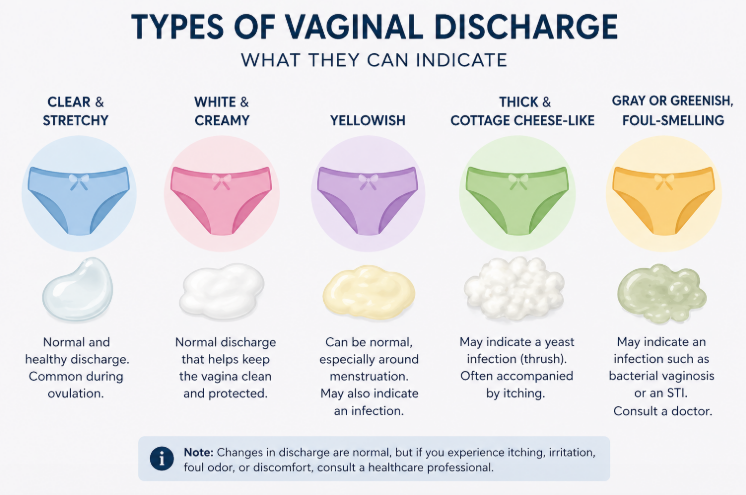
Vaginal discharge is fluid released from the vagina and cervix. It contains fluid, cells, and normal bacteria that help keep the vaginal environment balanced.
The amount, color, and texture can change during the menstrual cycle, pregnancy, ovulation, sexual arousal, and hormonal changes.
Quick Answer: Is Vaginal Discharge Normal or Not?
Vaginal discharge is usually normal when it is:
| Normal Discharge | What It Usually Means |
| Clear or white | Common and healthy |
| Mild or no smell | Usually normal |
| Slippery/stretchy around ovulation | Related to fertility hormones |
| Slightly thicker before periods | Hormonal change |
| Increased during pregnancy | Often normal due to hormones |
| No itching, pain, or burning | Less likely to be infection |
Vaginal discharge may not be normal when it is:
| Abnormal Discharge | Possible Concern |
| Yellow, green, or grey | Infection or STI possible |
| Thick and clumpy | Yeast infection possible |
| Fishy or foul smell | Bacterial vaginosis or infection possible |
| Frothy discharge | Trichomoniasis possible |
| Bloody discharge outside periods | Needs medical evaluation |
| With itching, burning, pain, or swelling | Infection or irritation possible |
| With pelvic pain or fever | Needs urgent care |
Why Does Vaginal Discharge Happen?
Vaginal discharge happens because the vagina is self-cleaning. It naturally removes old cells and maintains a healthy balance of bacteria and acidity.
The vagina normally contains protective bacteria, especially lactobacilli, which help keep the vaginal pH acidic. When this balance changes, abnormal discharge, odor, itching, or infection may occur.
Common reasons discharge changes include:
- Menstrual cycle changes
- Ovulation
- Pregnancy
- Hormonal contraception
- Sexual activity
- Antibiotic use
- Poorly controlled diabetes
- Vaginal infections
- Sexually transmitted infections
- Menopause-related dryness
- Irritation from soaps, sprays, or scented products
A proper diagnosis matters because different causes need different treatment.
Normal Vaginal Discharge During the Menstrual Cycle
Vaginal discharge often changes throughout the month.
After Your Period
Discharge may be minimal or slightly brownish because old blood is leaving the vagina. This is usually normal if it clears quickly and there is no bad smell or pain.
Before Ovulation
Discharge may become clear, slippery, and stretchy. Many people describe it as egg-white-like. This happens because estrogen rises around ovulation.
After Ovulation
Discharge may become thicker, creamier, or white due to progesterone changes.
Before Your Period
Some people notice thicker white or slightly sticky discharge before menstruation. Mild changes can be normal unless there is itching, burning, odor, or unusual color.
Vaginal Discharge Color Guide
Color can give clues, but it does not confirm the diagnosis by itself. Symptoms, smell, timing, pregnancy status, sexual history, and examination findings are also important.
| Discharge Color | May Be Normal? | Possible Causes | When to See a Doctor |
| Clear | Yes | Normal, ovulation, arousal | If watery and excessive with pain or irritation |
| White | Yes | Normal, hormonal changes | If thick, clumpy, itchy, or burning |
| Creamy/off-white | Often | Normal cycle change | If foul-smelling or painful |
| Yellow | Sometimes | Infection, STI, old discharge | If bright yellow, bad smell, itching, pain |
| Green | No | STI or infection possible | Medical evaluation recommended |
| Grey | No | Bacterial vaginosis possible | Medical evaluation recommended |
| Brown | Sometimes | Old period blood | If persistent or between periods |
| Pink/red | Sometimes | Period spotting, irritation | If unexplained, recurrent, pregnant, or painful |
| Frothy | No | Trichomoniasis possible | Medical evaluation recommended |
Common Vaginal Discharge Causes
There is not one single vaginal discharge cause. The cause depends on the type of discharge and related symptoms.
1. Normal Hormonal Changes
Hormonal changes are one of the most common reasons for discharge variation. This includes changes during ovulation, before periods, pregnancy, breastfeeding, and perimenopause.
Normal hormonal discharge usually does not cause itching, burning, pelvic pain, or a strong odor.
2. Yeast Infection
A yeast infection can cause thick, white, clumpy discharge. It may look like cottage cheese. It is often associated with itching, redness, soreness, and burning.
Yeast infections are common, but self-diagnosis is not always accurate. Some STIs or bacterial infections can feel similar.
3. Bacterial Vaginosis
Bacterial vaginosis, or BV, happens when the normal vaginal bacteria balance changes. It may cause thin grey or white discharge with a fishy smell.
BV is not the same as poor hygiene. Over-washing, douching, scented products, and changes in vaginal bacteria can contribute.
4. Trichomoniasis
Trichomoniasis is a sexually transmitted infection that may cause yellow-green, frothy, or foul-smelling discharge. It may also cause itching, burning, discomfort during urination, or pain during sex.
It requires medical diagnosis and treatment.
5. Chlamydia or Gonorrhea
Chlamydia and gonorrhea can cause abnormal vaginal discharge, pelvic pain, bleeding between periods, or pain during urination. However, many people may have no symptoms.
6. Cervicitis
Cervicitis means inflammation of the cervix. It may be caused by infection, irritation, or STIs. Symptoms may include discharge, pelvic discomfort, bleeding after sex, or spotting between periods.
7. Pelvic Inflammatory Disease
Pelvic inflammatory disease, or PID, can develop when infection spreads to the uterus, fallopian tubes, or ovaries. It may cause pelvic pain, fever, abnormal discharge, pain during sex, or abnormal bleeding.
PID needs prompt medical treatment.
8. Pregnancy
Increased vaginal discharge during pregnancy is common because of hormonal changes and increased blood flow. It is usually thin, milky, or white with a mild odor.
Pregnant women should seek care if discharge is green, yellow, bloody, foul-smelling, watery like fluid leakage, or associated with itching, pain, fever, or contractions.
9. Menopause and Low Estrogen
After menopause, low estrogen can cause vaginal dryness, irritation, burning, discomfort, and sometimes discharge. This may be related to vaginal atrophy or inflammation.
A gynaecologist can help distinguish hormonal dryness from infection.
10. Irritation or Allergy
Scented soaps, vaginal sprays, perfumed pads, harsh cleansers, detergents, lubricants, and douching may irritate the vaginal area.
Irritation can cause burning, itching, redness, and discharge changes.
Normal vs Abnormal Vaginal Discharge: Easy Comparison
| Feature | Normal Vaginal Discharge | Abnormal Vaginal Discharge |
| Color | Clear, white, off-white | Yellow, green, grey, bloody, unusual brown |
| Smell | Mild or no smell | Fishy, foul, strong |
| Texture | Watery, slippery, creamy, stretchy | Clumpy, frothy, pus-like |
| Symptoms | No pain, itching, or burning | Itching, burning, swelling, pain |
| Timing | Changes with cycle | Sudden, persistent, worsening |
| Pain | No pelvic pain | Pelvic pain, fever, pain during urination |
| Treatment | Usually none needed | Depends on diagnosis |
When Should You Visit a Gynaecologist?

You should visit a gynaecologist in Nepal if you notice:
- Green, grey, or yellow discharge
- Thick clumpy discharge with itching
- Fishy or foul smell
- Burning during urination
- Pelvic pain
- Fever
- Bleeding between periods
- Pain during sex
- Discharge after unprotected sex
- Recurrent infections
- Symptoms during pregnancy
- Discharge after menopause
A gynaecologist can perform an examination, recommend tests, and provide safe treatment.
Avoid repeatedly treating discharge with over-the-counter medicine without diagnosis. Wrong treatment can delay proper care and may worsen symptoms.
How a Gynaecology Clinic Diagnoses Vaginal Discharge
At a gynae clinic in Nepal, evaluation usually begins with a medical history and symptom review.
The doctor may ask:
- When did the discharge start?
- What color is it?
- Is there itching, burning, pain, or odor?
- Is there bleeding between periods?
- Are you pregnant?
- Are you sexually active?
- Have you used antibiotics recently?
- Have you used vaginal washes or scented products?
- Have you had similar symptoms before?
Depending on symptoms, tests may include:
| Test | Why It Is Done |
| Pelvic examination | Checks inflammation, discharge, cervix, pain |
| Vaginal swab | Identifies yeast, BV, trichomoniasis, or other infection |
| pH testing | Helps detect BV or trichomoniasis pattern |
| Microscopy | Looks for yeast, clue cells, or parasites |
| STI testing | Checks chlamydia, gonorrhea, trichomoniasis if indicated |
| Urine test | If urinary symptoms are present |
| Pregnancy test | If pregnancy is possible |
| Pap smear/HPV test | If cervical screening is due or indicated |
WHO guidelines emphasize evidence-informed management of people with symptoms of sexually transmitted infections, including vaginal discharge syndrome.
Treatment for Vaginal Discharge
Treatment depends on the cause. Not all discharges need medicine.
| Cause | Common Treatment Approach |
| Normal hormonal discharge | Reassurance, hygiene guidance |
| Yeast infection | Antifungal medicine |
| Bacterial vaginosis | Antibiotics prescribed by doctor |
| Trichomoniasis | Antibiotic treatment; partner treatment may be needed |
| Chlamydia/gonorrhea | STI-specific antibiotics |
| Cervicitis | Treat underlying cause |
| Menopause-related dryness | Vaginal moisturizers or hormone-based options if appropriate |
| Irritation/allergy | Avoid triggers, gentle vulvar care |
| Pregnancy-related abnormal discharge | Pregnancy-safe evaluation and treatment |
Do not start antibiotics on your own. Different infections need different medicines, and incomplete or incorrect treatment can lead to recurrence or complications.
Can Vaginal Discharge Go Away on Its Own?
Normal discharge does not need treatment.
Mild irritation may improve after avoiding scented products, harsh soaps, or douching. However, infections such as bacterial vaginosis, trichomoniasis, gonorrhea, or chlamydia usually need proper medical treatment.
If discharge is persistent, recurrent, foul-smelling, painful, or associated with itching or bleeding, it is better to consult a gynaecologist.
What Should You Avoid If You Have an Abnormal Discharge?
Avoid douching, vaginal steaming, scented washes, strong soaps, and inserting home remedies into the vagina. These can disturb the vaginal microbiome and worsen irritation.
Also avoid using leftover antibiotics or antifungal medicines without diagnosis.
The vagina does not need internal washing. Gentle external cleaning with water and mild, unscented soap is usually enough.
Vaginal Discharge During Pregnancy: What Is Normal?
Pregnancy often increases vaginal discharge. Normal pregnancy discharge is usually thin, white or milky, and mild-smelling.
However, pregnant women should contact a gynaecologist if discharge is:
- Green, yellow, or grey
- Bloody
- Foul-smelling
- Associated with itching or burning
- Watery like fluid leakage
- Associated with pelvic pain, fever, or contractions
Prompt care is important during pregnancy because infections may affect comfort and pregnancy outcomes.
Vaginal Discharge After Sex
Some discharge after sex can be normal due to natural lubrication, semen, or cervical mucus.
But discharge after sex should be checked if it has a strong smell, unusual color, pelvic pain, bleeding, itching, or burning.
Bleeding after sex is not always serious, but it should be evaluated, especially if it happens repeatedly.
Recurrent Vaginal Discharge: Why Does It Keep Coming Back?
Recurrent discharge may happen if the original cause was not treated correctly or if there are repeated triggers.
Possible reasons include:
- Recurrent yeast infection
- Recurrent bacterial vaginosis
- Untreated partner in STI-related cases
- Diabetes or blood sugar issues
- Frequent antibiotic use
- Douching or scented products
- Hormonal changes
- Incorrect self-treatment
- Resistant or mixed infection
A gynaecologist may recommend testing rather than treating based only on symptoms.
How to Maintain Healthy Vaginal Discharge
Healthy discharge is part of normal vaginal function. The goal is not to stop discharge completely.
Helpful habits include:
- Avoid douching
- Avoid scented vaginal products
- Wear breathable underwear
- Change pads regularly during periods
- Wipe front to back
- Complete prescribed treatment
- Seek STI testing when needed
- Avoid self-medicating repeatedly
- Manage diabetes if present
- Visit a gynaecologist for recurrent symptoms
Good vulvar care supports comfort, but it does not replace medical treatment when infection is present.
Why Choose Karuna City Clinic for Gynaecology Care in Nepal?

Karuna City Clinic is a multispecialty healthcare clinic located at RASAP Bhawan, Naya Bazar, Kathmandu-16, Bagmati Province, Nepal. The clinic provides OB/GYN services and women’s health consultations through its gynaecology department.
For symptoms like abnormal vaginal discharge, choosing a dedicated gynaecology clinic in Nepal helps patients receive proper evaluation instead of guessing the cause.
Karuna City Clinic’s gynecology service information includes women’s health support, consultation-based care, pelvic health, contraception, infertility support, Pap smear, HPV DNA testing, colposcopy, and related gynecological procedures.
A diagnosis-first approach is especially important for vaginal discharge because yeast infection, BV, STI-related discharge, cervical inflammation, and pregnancy-related discharge can look similar but require different treatment.
FAQs About Vaginal Discharge
1. What is normal vaginal discharge?
Normal vaginal discharge is usually clear, white, or off-white. It may be watery, slippery, stretchy, or creamy depending on the menstrual cycle.
It should not have a strong unpleasant smell and should not cause itching, burning, pain, or swelling.
2. What causes vaginal discharge?
Vaginal discharge can be caused by normal hormonal changes, ovulation, pregnancy, sexual arousal, contraception, yeast infection, bacterial vaginosis, STIs, cervicitis, menopause, irritation, or allergy.
The exact vaginal discharge cause depends on color, smell, texture, symptoms, pregnancy status, and test results.
3. Is white vaginal discharge normal?
White discharge can be normal, especially before a period or after ovulation.
However, thick white clumpy discharge with itching, redness, or burning may suggest a yeast infection and should be checked if symptoms are uncomfortable or recurrent.
4. Is yellow vaginal discharge normal?
Light yellow discharge can sometimes occur when normal discharge dries on underwear. Bright yellow discharge, especially with odor, itching, burning, pelvic pain, or pain during urination, may suggest infection.
A gynaecologist can identify the cause with examination and testing.
5. What does green vaginal discharge mean?
Green discharge is usually not considered normal. It may be linked to infection, including sexually transmitted infections such as trichomoniasis.
Medical evaluation is recommended.
6. Why does vaginal discharge smell fishy?
A fishy smell may be associated with bacterial vaginosis, especially if the discharge is thin, white, or grey.
It is better to see a gynaecologist because treatment depends on the diagnosis.
7. Can vaginal discharge happen before periods?
Yes. Discharge may become thicker, white, or creamy before periods due to hormonal changes.
It is usually normal if there is no bad smell, itching, burning, pelvic pain, or unusual bleeding.
8. Is vaginal discharge normal during pregnancy?
Increased discharge during pregnancy is common. It is often thin, white, or milky with mild smell.
Pregnant women should seek care if discharge is green, yellow, bloody, foul-smelling, watery like fluid leakage, or associated with itching, pain, fever, or contractions.
9. When should I visit a gynaecologist for vaginal discharge?
Visit a gynaecologist if discharge is green, grey, yellow, bloody, foul-smelling, thick and clumpy with itching, or associated with burning, pelvic pain, fever, bleeding, pregnancy, or recurrent symptoms.
10. Which doctor treats vaginal discharge in Nepal?
A gynaecologist treats vaginal discharge. If you are looking for a gynaecologist in Nepal or a gynae clinic in Nepal, Karuna City Clinic in Kathmandu provides OB/GYN consultation and women’s health services.
Final Takeaway
Vaginal discharge is usually normal when it is clear or white, mild-smelling, and not associated with discomfort. It changes naturally during the menstrual cycle, pregnancy, and hormonal shifts.
But discharge that is green, yellow, grey, bloody, foul-smelling, thick and clumpy, frothy, painful, itchy, or recurrent may signal infection or another health concern.
If you are unsure whether your vaginal discharge is normal or not, consult a qualified gynaecologist. A proper diagnosis helps you receive the right treatment and avoid unnecessary medicines.
For women looking for a trusted gynaecology clinic in Nepal, gynaecologist in Nepal, or gynae clinic in Nepal, Karuna City Clinic offers women’s health consultation and gynecological care in Kathmandu.
Author Bio
Karuna City Clinic OB/GYN Team provides women’s health consultation and gynaecology care in Kathmandu, Nepal. The clinic supports patients with menstrual concerns, vaginal discharge, pelvic health symptoms, pregnancy-related concerns, contraception, infertility support, screening tests, and gynecological procedures. The team follows a diagnosis-first approach focused on patient education, privacy, safety, and evidence-based care.