February is recognized globally as Gallbladder & Bile Duct Cancer Awareness Month, a time dedicated to improving understanding of two rare but highly aggressive cancers that often go undetected until advanced stages.
Gallbladder Cancer and Bile Duct Cancer (Cholangiocarcinoma) fall under a broader group known as hepatobiliary cancers, affecting the organs responsible for bile production and transport. Due to subtle early symptoms and limited public awareness, these cancers frequently present late, reducing treatment options and survival outcomes.
This article provides an evidence-based, public-awareness overview of gallbladder and bile duct cancers, who is at risk, early warning signs, and why awareness initiatives in February matter, especially in countries like Nepal.
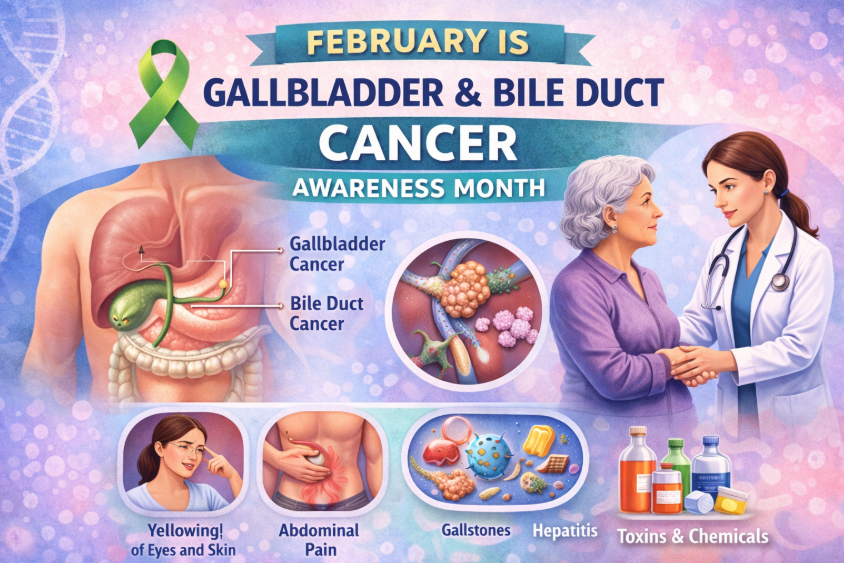
What Is Gallbladder & Bile Duct Cancer?
Gallbladder Cancer
Gallbladder cancer originates in the gallbladder, a small organ beneath the liver that stores bile. It is often associated with long-standing gallstones and chronic inflammation.
Bile Duct Cancer (Cholangiocarcinoma)
Bile duct cancer develops in the ducts that carry bile from the liver to the small intestine. It may occur:
- Inside the liver (intrahepatic)
- Outside the liver (extrahepatic)
Both cancers are uncommon globally but have higher incidence in parts of South Asia, including Nepal.
Why Awareness Matters
Gallbladder and bile duct cancers are often called “silent cancers” because:
- Early symptoms are vague or absent
- Symptoms mimic common digestive problems
- Diagnosis often occurs at an advanced stage
Raising awareness helps people recognize warning signs earlier and seek timely medical evaluation.
Global and Regional Burden (Data Snapshot)
- Gallbladder cancer accounts for 1–2% of all cancers worldwide
- It is 3–4 times more common in women
- South Asia reports higher prevalence, especially among older adults
- Bile duct cancer incidence is rising globally, with late diagnosis common
In Nepal, hepatobiliary cancers are frequently diagnosed at advanced stages due to delayed presentation and limited early screening.
Common Risk Factors
Risk Factors for Gallbladder Cancer
- Long-standing gallstones
- Chronic gallbladder inflammation
- Female gender
- Increasing age
- Obesity
- Certain genetic predispositions
Risk Factors for Bile Duct Cancer
- Chronic bile duct inflammation
- Liver disease
- Bile duct abnormalities
- Parasitic infections (in some regions)
- Primary sclerosing cholangitis
Understanding risk factors is essential for targeted vigilance, especially in high-risk populations.
Early Signs and Symptoms to Watch For
Early-stage gallbladder and bile duct cancers may be asymptomatic. When symptoms appear, they are often nonspecific.
Common Warning Signs
- Persistent abdominal pain (especially right upper abdomen)
- Jaundice (yellowing of skin and eyes)
- Unexplained weight loss
- Loss of appetite
- Nausea or vomiting
- Itching (due to bile obstruction)
- Pale stools or dark urine
These symptoms do not automatically indicate cancer, but persistent or worsening signs require medical evaluation.
Why These Cancers Are Often Diagnosed Late
Several factors contribute to delayed diagnosis:
- Symptoms overlap with gallstones or gastritis
- Limited awareness among the general population
- Lack of routine screening for asymptomatic individuals
- Rapid disease progression in some cases
This makes public awareness campaigns like Gallbladder & Bile Duct Cancer Awareness Month critically important.
How Gallbladder and Bile Duct Cancers Are Diagnosed
Diagnosis typically involves:
- Detailed medical history
- Blood tests (including liver function tests)
- Imaging studies (ultrasound, CT, MRI)
- Endoscopic evaluation when required
- Tissue biopsy for confirmation
Early detection improves treatment planning and may expand available treatment options.
Treatment Approaches (High-Level Overview)
Treatment depends on:
- Cancer type
- Stage at diagnosis
- Overall health of the patient
Common Modalities
- Surgery (when detected early)
- Chemotherapy
- Radiation therapy
- Palliative care for symptom control in advanced cases
Outcomes are significantly better when cancers are identified at a resectable stage.
The Importance of February Awareness Month
Gallbladder & Bile Duct Cancer Awareness Month in February serves several purposes:
- Educating the public about early symptoms
- Highlighting high-risk groups
- Encouraging timely medical consultation
- Supporting patients and families
Awareness months are not about fear, they are about informed action.
Community-Level Awareness in Nepal
In Nepal, awareness efforts are particularly important due to:
- High prevalence of gallstones
- Delayed healthcare access in some regions
- Limited public knowledge of hepatobiliary cancers
This February, Karuna City Clinic is supporting awareness by offering a month-long free OPD for Gallbladder & Bile Duct (Hepatobiliary) Cancer patients.
Such initiatives help reduce barriers to consultation and encourage early evaluation, an essential step in improving outcomes.
(This information is shared in the context of public awareness and access, not promotion.)
When Should Someone Seek Medical Advice?
Medical evaluation is recommended if:
- Abdominal pain persists beyond a few weeks
- Jaundice appears without a known cause
- Digestive symptoms worsen or recur
- There is a known history of gallstones with new symptoms
Early consultation does not always mean cancer but it ensures serious causes are not overlooked.
Living With or Beyond Hepatobiliary Cancer
For those diagnosed, care extends beyond treatment:
- Symptom management
- Nutritional support
- Emotional and psychological care
- Family education
Awareness helps not only in prevention and early detection but also in reducing stigma and isolation for patients.
Medical Review & Professional Disclaimer
This article is intended for educational and awareness purposes only. It does not replace professional medical advice. Diagnosis and treatment decisions should always be made in consultation with qualified healthcare professionals.
Frequently Asked Questions (FAQ)
What is Gallbladder & Bile Duct Cancer Awareness Month?
February is observed to raise awareness about gallbladder and bile duct cancers, their risks, and early symptoms.
Are gallstones always linked to gallbladder cancer?
No. Most people with gallstones do not develop cancer, but long-standing gallstones increase risk.
Is bile duct cancer curable?
Early-stage bile duct cancer may be treated surgically. Advanced stages focus on disease control and symptom management.
Are these cancers common in Nepal?
They are less common overall but have relatively higher incidence compared to some regions, often diagnosed late.
Do early symptoms always appear?
No. Early stages may be silent, which is why awareness and timely evaluation matter.
Final Message
Gallbladder & Bile Duct Cancer Awareness Month is a reminder that rare cancers deserve attention too. Understanding risks, recognizing early warning signs, and seeking timely care can make a meaningful difference.
February is not just about awareness it is about knowledge, access, and action.